
Progressive Muscle Relaxation Technique
 Stress doesn't just live in your mind — it settles into your body. Tight shoulders, a clenched jaw, a stomach in knots: these are the physical fingerprints of anxiety and chronic stress. Progressive muscle relaxation (PMR) is a technique built specifically to address this mind-body link, and decades of clinical use have made it one of the most accessible relaxation methods available today.
What Is Progressive Muscle Relaxation?
Progressive muscle relaxation is a structured technique for reducing physical tension and anxiety by deliberately tensing and then releasing different muscle groups throughout the body, one at a time. The method was developed in the 1930s by American physician Edmund Jacobson, who observed a strong link between muscular tension and states of anxiety and stress. His insight was straightforward but powerful: if the mind and body are connected, then learning to relax the body should help calm the mind.
A typical PMR session works through 16 major muscle groups — starting anywhere from the feet to the face — in a consistent sequence. Each muscle group is tensed firmly (but not to the point of strain) for about 5 to 8 seconds, then released and allowed to relax for 20 to 30 seconds while you notice the contrast between tension and ease. Over time and with practice, this sequence can be shortened, and experienced practitioners can often relax specific muscle groups almost instantly, without needing to tense them first.
The Theory Behind It
- PMR isn't just a relaxation exercise — it rests on several well-established psychological and physiological principles:
- Mind-body connection. Mental states such as anxiety and stress often show up physically as muscle tension. Learning to control that tension can, in turn, support mental calm.
- Reciprocal inhibition. Relaxing muscles and activating a stress response are, in a sense, mutually exclusive. Deliberately relaxing the body helps deactivate the "fight or flight" response.
- Counterconditioning. By repeatedly pairing a relaxation response with situations or thoughts that normally trigger anxiety, PMR can help "recondition" the nervous system's automatic reactions.
- Neuromuscular feedback. The deliberate contrast between tensing and releasing sharpens body awareness, making it easier to notice — and release — tension before it builds up.
- Skills acquisition. Like any skill, relaxation improves with repetition. Regular practice makes the response faster, more automatic, and easier to call on in real time. Together, these mechanisms help shift the body out of sympathetic nervous system activation (the stress response) and into parasympathetic activation — the "rest and digest" state associated with lower heart rate, blood pressure, and muscle tone.
Why It Works: The Physiology
- When you engage in PMR, several measurable changes tend to occur:
- Heart rate and blood pressure decrease
- Breathing slows and deepens
- Muscle tone drops throughout the body
- The parasympathetic nervous system becomes more active, counteracting stress hormones
- Calming neurotransmitters, including serotonin, are released These physiological shifts are the reason PMR is used clinically — not just as a "feel good" exercise, but as a tool with measurable effects on the body's stress response.
Key Benefits
- Reduced muscle tension and physical stress symptoms
- Lower blood pressure and heart rate
- Improved sleep quality
- Reduced anxiety and general psychological distress
- Better ability to cope with stressful situations
- Enhanced body awareness and mindfulness
- Support for managing chronic pain, including tension headaches
- Greater sense of control over one's own stress response Because it requires no equipment and can be practiced almost anywhere, PMR also offers something many relaxation techniques don't: portability. Once the skill is learned, it can be adapted into brief tension-release cycles usable in the middle of a stressful meeting, before a difficult conversation, or while lying awake at night.
Osteopathic Mentor - mentorship and courses
PMR for Muscle Pain and Myofascial Dysfunction
-
Beyond general stress relief, PMR has specific applications for muscular and myofascial pain:
- Reducing chronic tension. Learning to voluntarily release unnecessary muscle tension can ease pain linked to sustained muscle tightness or spasm.
- Addressing trigger points. The tense-and-release cycle may help loosen tight bands of muscle tissue (trigger points) that refer pain to other areas.
- Improving circulation. Alternating contraction and relaxation helps promote blood flow to muscle tissue, which can support healing and interrupt the low-oxygen conditions that sustain trigger points.
- Building body awareness. Practicing PMR helps people notice tension patterns they weren't previously aware of, making it easier to identify areas that need targeted stretching or treatment.
- Lowering pain perception. The relaxation response itself can dampen the way pain signals are processed, offering some relief independent of the underlying mechanical issue. That said, PMR is generally not a stand-alone cure for chronic myofascial dysfunction. It works best as one part of a broader approach that may include stretching, postural correction, manual therapy, or trigger point treatment.
How to Practice Progressive Muscle Relaxation
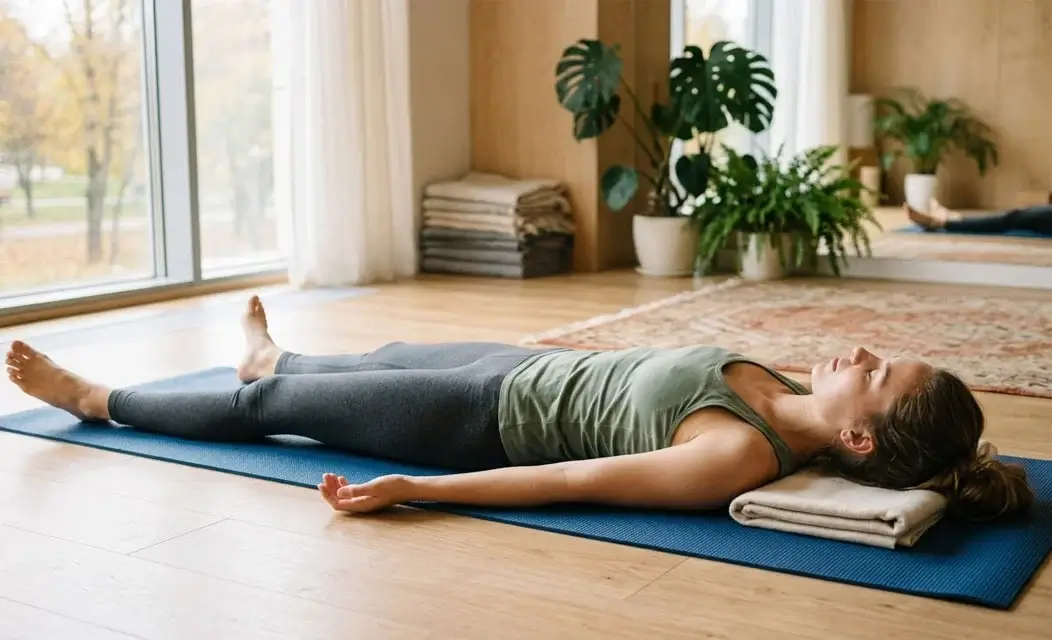
- Set the stage. Choose 10–20 minutes where you won't be interrupted. Sit or lie down somewhere comfortable, wearing loose clothing.
- Settle in. Close your eyes and take a few slow, deep breaths to begin winding down.
- Work through the muscle groups. Starting at the feet (or the face, if you prefer) and moving systematically through the body, tense each muscle group for 5–10 seconds, then release for 20–30 seconds. Pay close attention to the difference between the tension and the relaxation that follows.
- Stay present. Focus fully on the physical sensations in each area. If your mind wanders, gently bring your attention back to the muscles you're working with.
- Finish with a body scan. After completing all the muscle groups, take a few more deep breaths and mentally scan your body from head to toe, noticing the overall sense of relaxation.
- Practice consistently. Daily practice — even just 5 minutes — builds the skill faster than occasional long sessions. Like any technique, it takes time and patience to master.
- Use it in real life. As you become more familiar with the sequence, you can shorten it and use brief tension-release cycles discreetly during stressful moments — at your desk, in traffic, or before a difficult conversation.
A Few Practical Tips
- Tense muscles moderately — enough to feel it clearly, but not to the point of strain or cramping.
- Don't hold your breath while tensing; keep breathing steadily throughout.
- Using a guided audio recording can be helpful when you're first learning the sequence.
- Expect some inconsistency at first. Relaxation is a skill, and like any skill, it improves with repetition.
- PMR works well alongside other approaches, such as cognitive behavioral therapy, autogenic training, or manual and physical therapy, rather than as a replacement for them.
Progressive muscle relaxation is a simple, well-studied technique that uses the body to calm the mind. By systematically tensing and releasing muscle groups, it activates the parasympathetic nervous system, reduces physical tension, and builds a transferable skill for managing stress, anxiety, sleep difficulties, and certain types of muscle pain. It requires no special equipment, no prior experience, and — with regular practice — becomes a relaxation tool you can carry with you into everyday life.
☛ Post isometric relaxation technique stretching PIR.
☛ Schultz Autogenic Training exercises.
New on Instagram:
Treatment techniques

Online consultancy

Quick test
About me