
Osteopathic Mentor - mentorship and courses
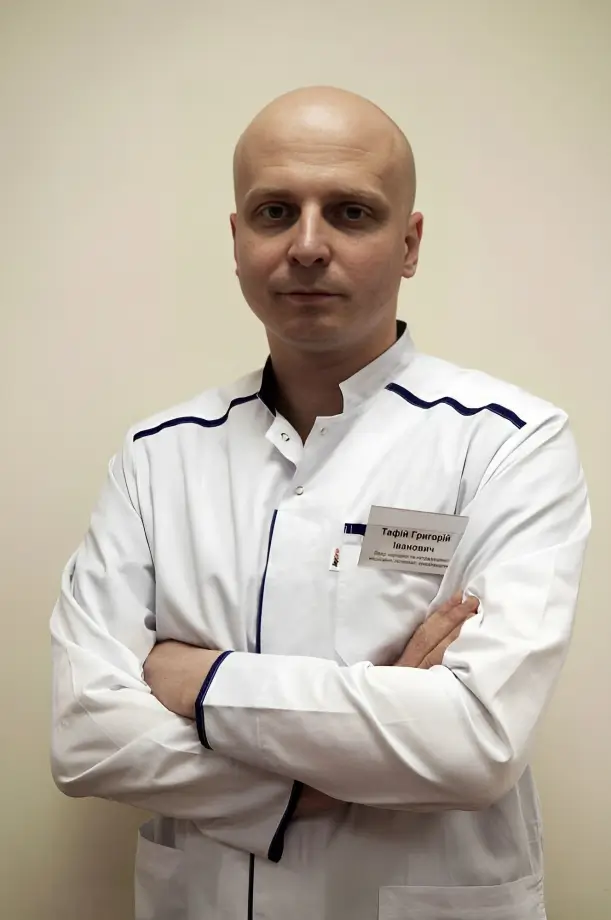
Welcome! If you are looking for valuable knowledge, you have come to the right place. Only well-structured information that is grounded in real practice can truly be called knowledge — everything else is simply chaotic noise leading nowhere, of which there is far too much in today's world.
My journey in medicine began in 2001 at university, followed by two years of residency. With this solid foundation, I have spent 17 years studying and practising my favourite field of medicine: biomechanics, osteopathy and various manual methods, therapeutic exercises and wellness techniques, and the restoration of balance in the nervous system and the body as a whole. I love to explain, and I have a great deal to share.
Training is available in various formats: one-off consultations, short courses, and long-term mentorship.
For patients
For patients and colleagues
Introductory courses and guidance on self-healing methods
(click to view details)
For colleagues
For everyone who wants to work with other people as well, I offer the following options:
Upcoming courses (individual mentorship format already available)
- Introduction to differential diagnosis of dysfunctions and red flags
How to recognise and find the true cause of pain. - Basic diagnosis and treatment of joint dysfunctions
Gentle and safe joint methods. - Basic diagnosis and treatment of myo-fascial dysfunctions
Muscles, fascia and soft tissues. - Basic diagnosis and treatment of neural dysfunctions
From simple tests to exercises and manipulations.

Self-applied joint mobilisations
Who it is suitable for
For restricted movement and joint or spinal pain, prevention of the onset and progression of arthrosis, spondylarthrosis and intervertebral disc conditions. These are also methods for restoring body balance: correcting pelvic misalignment, leg length discrepancy and other latent dysfunctions. If you are interested in therapeutic joint methods for yourself, for your loved ones, or wish to expand your ability to help clients.
What the course includes
Gentle techniques for normalising joint mechanics and restoring free, pain-free movement in regions such as:
Atlas and axis vertebrae, mid-cervical region, cervicothoracic junction and dowager's hump, thoracic and lumbar spine, pelvic ring and sacroiliac joints, hip, knee, foot and toe joints (including the big toe), clavicular joints and shoulder joint, elbow and wrist, fingers.
Course plan and price
A four-week course with four online sessions and additional materials. During the seminars I explain the basic theoretical principles, give practical assignments and answer any questions that arise.
- Week 1: Introduction to joint mechanics and joint methods in manual therapy
The best methods adapted for self-application
Indications and testing
The foundation of the body: hip joints and pelvis - Week 2: Thorax, shoulders.
- Week 3: Lumbar spine, pelvis.
- Week 4: Legs and arms.
My experience in teaching others and personal use
From the very beginning of my practice I have been prescribing individual joint mobilisations to patients in order to maintain the results achieved and prevent the onset of dysfunctions. Self-mobilisations are also part of my daily wellness routine. As a result, although I have significant post-traumatic arthrosis, nothing hurts or causes me any trouble.
Self-applied methods for myofascial pain
Who it is suitable for
Myofascial pain is the most common cause of pain in general, so knowing how to diagnose and treat it is critically important. Whether you suffer from headaches, persistent discomfort in the neck or between the shoulder blades, in the lower back or shoulder — the range of symptoms can be enormous. If you are interested in therapeutic methods for pain originating from muscles and fascia, for yourself, for your loved ones, or wish to expand your ability to help clients.
What the course includes
Diagnosis and trigger point therapy methods for myofascial pain in regions such as:
Headaches, masticatory muscles, neck and shoulder blade pain, thoracic and lumbar regions, pelvis, gluteal and thigh pain (which can sometimes mimic sciatic nerve pain), knee and below, shoulder, elbow and hand.
Course plan and price
A four-week course with four online sessions and additional materials. During the seminars I explain the basic theoretical principles, give practical assignments and answer any questions that arise.
- Week 1: Introduction to myofascial pain and dysfunctions. Their causes and long-acting harmful factors.
The best methods adapted for self-application
How to find the source of pain, diagnostic palpation.
Head and neck - Week 2: Thorax, shoulders.
- Week 3: Lumbar spine, pelvis.
- Week 4: Legs and arms.
My experience
Myofascial pain is where my journey in manual therapy began. It was fascinating to discover that the site of pain is not always where the problem lies. It was equally interesting to find and eliminate in myself the causes of restricted neck rotation to the left and periodic headaches — all of which have Latin names. After that came new methods and countless patients, in many of whom the myo-fascia was the primary problem.
Self-applied nerve mobilisations
Who it is suitable for
For symptoms that may be associated with nerve compression, impaired nerve gliding or tension, and consequently impaired nerve function. Sensations of numbness, tingling, burning, altered sensitivity; shooting, burning, sometimes pulling pains radiating from the neck into the occiput, shoulder and arm, from the lower back into the buttock and leg, intercostal neuralgia. If you are interested in therapeutic methods for numbness, pain or other symptoms originating from trapped nerves, for yourself, for your loved ones, or wish to expand your ability to help clients.
What the course includes
Diagnostic tests and methods for treating impaired nerve mobility in regions such as:
Occiput and neck, shoulders and arms, intercostal nerves, symptoms in the buttocks, posterior and anterior thigh, lower leg and foot.
Course plan and price
A four-week course with four online sessions and additional materials. During the seminars I explain the basic theoretical principles, give practical assignments and answer any questions that arise.
- Week 1: Introduction to nerve anatomy and biomechanics. Manifestations and causes of impaired nerve mobility.
The best methods adapted for self-application
How to find the cause of symptoms, diagnostic tests.
Head, neck and cervical plexus nerves - Week 2: Brachial plexus, symptoms in the shoulders, arms and hands.
- Week 3: Lumbosacral plexus and symptoms in the buttocks and legs.
- Week 4: Intercostal nerves. Acute cases and common mistakes.
My experience
The diagnosis and treatment of impaired nerve mobility is one of the topics I find most fascinating. Therapeutic exercises and manual methods are often counterintuitive — meaning most people do exactly the opposite and only make things worse. As for personal experience with self-application, I have that too — eliminating the symptoms of post-traumatic ulnar nerve entrapment (numbness of the little finger and surrounding area). In my work with patients, nerve testing and, where necessary, nerve release is standard practice.
Self-applied stress control methods
Who it is suitable for
If you are interested in methods to balance the nervous system and relieve the manifestations of stress, such as tension and chronic migratory pain, fibromyalgia, chronic fatigue, sleep disturbances, gastrointestinal disorders or many other symptoms — symptoms associated with dysfunction of the autonomic system and the vagus nerve as its most important component. For yourself, for your loved ones, or if you wish to expand your ability to help clients.
What the course includes
Diagnostic tests and methods for assessing autonomic balance, the best methods for independent practice.
Anatomy and function of the autonomic nervous system, vagus nerve reflexes and polyvagal theory.
Time-tested methods proven through personal practice: deep breathing, the Wim Hof method, qigong, autogenic training according to Schultz.
Course plan and price
A four-week course with four online sessions and additional materials. During the seminars I explain the basic theoretical principles, give practical assignments and answer any questions that arise.
- Week 1: Introduction to the anatomy and function of the autonomic nervous system. Stress responses, sympathetic, parasympathetic and vagus nerve.
Types, manifestations and causes of autonomic regulation disorders. Methods for assessing your own condition.
The best methods adapted for self-application.
Deep breathing - Week 2: The Wim Hof method, cold and breathing. Effects on inflammation and the immune system.
- Week 3: Qigong, Chinese breathing exercises.
- Week 4: Autogenic training. Where to go from here? Osteopathy, psychological and worldview dimensions.
My experience
Although I had some experience with self-regulation from my early university years — around that time I first encountered autogenic training — I only truly immersed myself in this subject about five years ago. Why? Because the question arose more and more often: "How can I help patients who have not only biomechanical dysfunctions, but whose entire regulatory systems have broken down and everything is out of balance?", "What can I do for my own nervous system as well?" I believe another factor was the beginning of the terrible war, which affected me, my loved ones and my patients alike. Today I successfully practise several of these methods myself, and help others along this challenging path towards inner balance and health.
Introductory overview consultation
Getting acquainted with your experience, methods, and what I can offer for your further development.
Who it is suitable for
You are only just planning to immerse yourself in the field of manual medicine, osteopathy, therapeutic massage or self-regulation methods.
You are a beginner who already knows and can do something, but feels somewhat lost among the vast number of different directions, methods, techniques and proprietary approaches.
You have been in practice for some time already but wish to expand your toolkit in order to successfully work with a wider range of problems.
Our plan
We will discuss in detail the methods you already use, what interests you in your long-term development and what results you are aiming for. Based on all this information and my experience with a wide variety of methods, I will help you find the best path to your goals, draw up a short- and long-term training and development plan, and recommend the necessary learning materials.
Price: 40 euros
Possible continuation
Studying the best diagnostic and treatment methods through joint reviews of complex and interesting cases, or an individual course on the topic of greatest interest.
Joint review of complex and interesting cases
I will help you look at the problem from a different perspective.
Who it is suitable for
Both beginners and experienced colleagues. Practice is the best way to truly gain a deep understanding of something complex. Our goal is not only to find the best solutions for a specific case, but also to learn how to do so for many similar cases in the future.
Our plan
Includes data analysis, discussion during an online consultation, recommendations on diagnostic tests, palpation, additional examinations or clarifying questions, and treatment techniques. Additionally, a follow-up discussion of results after the patient's next visit.
Price: 40 euros
Possible continuation
Studying the best methods across further cases on a regular basis, or an individual course on the topic of greatest interest.
New on Instagram:
Treatment techniques

Online consultancy

Quick test
About me