

McKenzie Method
The McKenzie Method, or Mechanical Diagnosis and Therapy (MDT), is a widely recognized system for examining and treating pain in the spine and extremities. Its defining feature — the one that drew me to it in the first place — is its emphasis on the patient's active participation rather than passive reliance on a specialist.
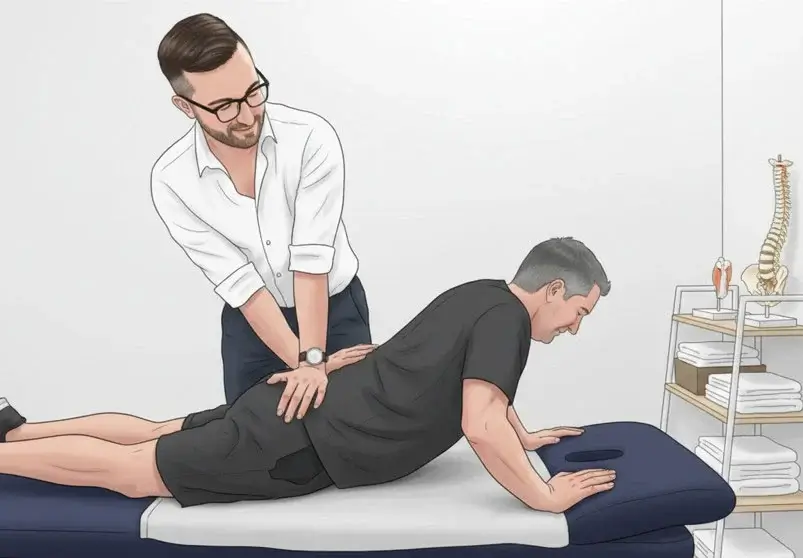 The story of the method began in 1956 in Wellington, when physiotherapist Robin McKenzie was treating a patient named Smith. Three weeks of standard heat and ultrasound therapy had produced no results. Then chance played its role: Smith lay down on a treatment table whose end had been left raised from the previous patient, placing him in a position of strong backward extension. The pain radiating into his leg immediately moved to the center of the lower back and subsided. McKenzie called this effect centralization — and built his entire system around it.
It is telling that this discovery happened by accident — and there is a certain logic to that. McKenzie did not invent the method in theory; he observed the response of a living body and drew conclusions from what he saw. This approach — from practice to system, rather than the other way around — largely explains why the method proved so viable and reproducible in the hands of other practitioners.
The McKenzie Method is built on three core principles:
- The patient actively participates in their own treatment: by McKenzie's estimate, around 80% of people are capable of resolving their pain independently with the right approach.
- Centralization: if pain during exercises shifts from the leg or arm toward the spine, this is a positive sign and a predictor of recovery.
- Classification based not on MRI images, but on how the body responds to movement. Three syndromes are identified: the postural syndrome — pain caused by prolonged immobility and poor posture; dysfunction — pain from already damaged or shortened tissues; and derangement — the most common presentation, involving displacement within the intervertebral disc, where pain can rapidly change both in character and location.
Osteopathic Mentor - mentorship and courses
Indications and Contraindications
The method works well for pain of a mechanical nature — in the lower back, neck, and shoulders. Several signs suggest it may be suitable for you: there are at least brief pain-free periods during the day, pain worsens with prolonged sitting or bending forward but eases with walking or lying on your stomach. It is important to understand, however, that the method is not used when serious pathologies are suspected — such as cancer, fractures, or infections — or when there is loss of bladder control.
Exercises are based on the principle of directional preference: the movement that reduces or centralizes pain is selected. Most often this is extension. For the lower back — lying on the stomach with a gradual lift of the upper body on the arms. For the neck — retraction, a horizontal backward shift of the head, followed by extension. Treatment always begins with the patient's own movements; if that is insufficient, overpressure with the hands is added, and only in complex cases — approximately 10–30% — is the assistance of a certified specialist required. McKenzie himself put it simply: no one will take better care of your spine than you yourself.
Place Among Other Methods
I have always been interested not only in manual therapy methods where the therapist works on the patient, but also in those that allow for self-application. Among these, the McKenzie Method holds a worthy place. The method is well developed, has a fairly long history, has been tested in practice, and is backed by an evidence base.
For my part, I frequently recommend certain basic exercises to my patients and see good results. In addition, the McKenzie approach has also found its place in the preventive exercises I have developed for my own use.
☛ Effects of qi gong breathing exercises.
☛ Individual Kinesiotherapy for Back and Beyond.
New on Instagram:
Treatment techniques

Online consultancy

Quick test
About me