

Pain in the outer thigh
Male, 32 years old. Complaints of pain along the lateral surface of the thigh and shin below the knee. The pain has been present for about a year. In recent months the pain has intensified, preventing his favourite hobby – running 5–10 kilometres; he now walks with a limp. Before the visit he had already seen an orthopaedist: no significant abnormalities were found, after which he was referred to a physical therapist: a programme of exercises and stretching produced no results.
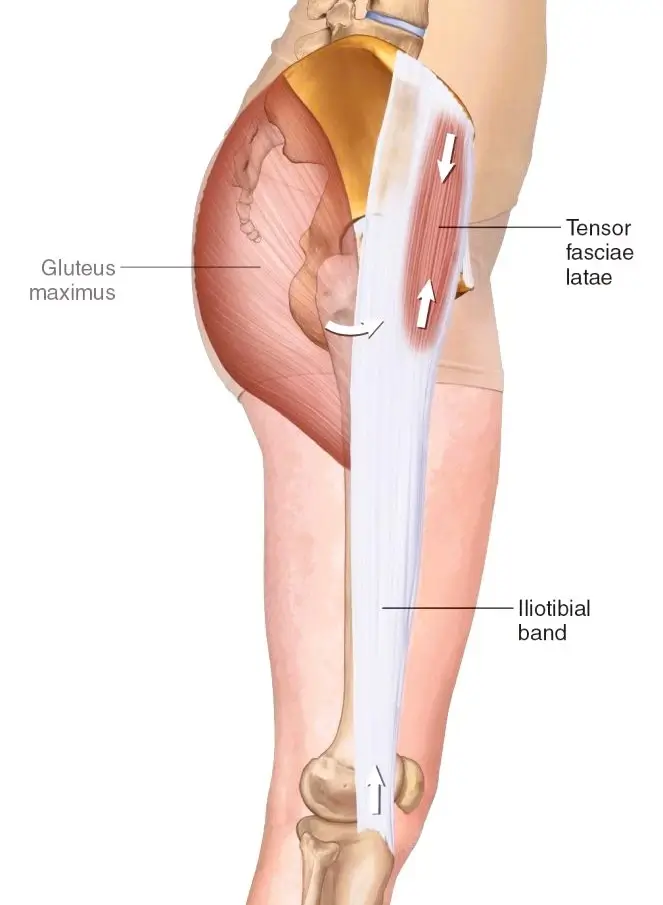 Objective examination: gait with a slight limp on the right leg; active abduction while lying on the left side provokes pain along the lateral surface of the thigh, which intensifies with resisted movement. The right half of the pelvis is immobile and fixed in a posterior rotation position; the SLUMP neural tension test is positive on the right, reproducing the familiar pain along the antero-lateral surface of the shin and thigh. Palpation of the fascial coordination centres along the abduction line is painful from the lumbar region to the foot, with the epicentre in the iliotibial band. The long and lateral portions of the quadriceps are also very tender. Passive internal rotation of the foot provokes pain in the shin.
Diagnosis: chronic regional dysfunction of the fascial chains (abduction line), right-sided pelvic dysfunction and impaired neural tissue mobility with symptoms in the region of the nervus peroneus (common fibular nerve), joint dysfunction of the fibula.
Treatment: combined neurodynamic technique for releasing the L4–L5 nerve roots to address the neural dysfunction; mobilisation of the iliosacral joint to restore normal mobility of the pelvic ring. And considerably more time-consuming methods for the clinically significant fascial restrictions identified: fascial manipulation, active myofascial release, deep tissue massage and Rolfing techniques (lumbar, pelvic, thigh and shin regions). Mobilisation of the proximal and distal joints of the fibula.
☛ Rolfing or structural integration
Results: already after the first session a noticeable, though gradual, reduction in discomfort and pain in the thigh; the pain below the knee resolved completely; the neural tension test turned negative. Almost no unpleasant sensations when walking. The patient was prescribed neurodynamic exercises to prevent compression of neural tissue; sporting activity was recommended to begin with cycling. Running on flat surfaces was gradually reintroduced later.
Pain along the lateral surface of the thigh and shin. Conclusions
An interesting case that once again illustrates the truth that there are only specific, individual problems requiring an individual approach – and, above all, proper diagnosis.
Standard exercises and stretching not only failed to help but made things worse. The physical therapist advised the patient to stretch through the pain, but what he was stretching was not muscle but an already affected nerve, traumatising and irritating it further – something that is categorically inadvisable. Also noteworthy is the cause of this condition in an otherwise healthy, well-conditioned athlete. In all likelihood, the pelvic ring dysfunction led to chronic overloading of the myofascial chains with subsequent densification and tenderness of the fascia. I believe this asymmetry also played a significant role in the entrapment of the nerve roots and the development of joint dysfunctions.

Grigori Tafi
Osteopath, sports medicine physician
15 years of experience in osteopathy and manual therapy. More details...
☛ Trapped sciatic nerve symptoms.
☛ Vagus Nerve and Osteopathy.
Most diagnostic and treatment methods can be performed remotely.
Feel free to reach out, and we will analyze your case in detail.
New on Instagram:
Treatment techniques

Online consultancy

Quick test
About me