
Atlas of Osteopathic Techniques
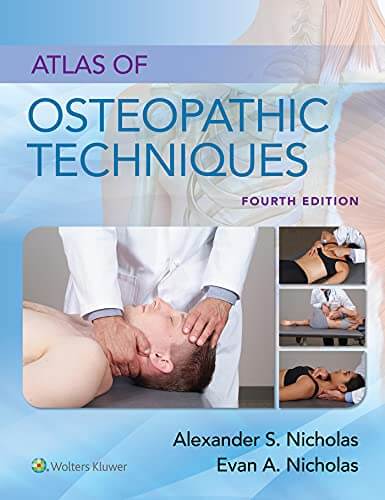
A one-of-a-kind atlas of osteopathic techniques, meticulously illustrated and logically structured. I remember buying this book many years ago was a real gift for me. I still actively use it and highly recommend it to you.
✔ My Bookshelf
Author(s)
Alexander S. Nicholas, DO
Alexander S. Nicholas, DO, FAAO, DIST: Professor and Chairman, Department of Osteopathic Manipulative Medicine, Philadelphia College of Osteopathic Medicine.
Evan A. Nicholas, DO
Evan A. Nicholas, DO: Associate Professor, Department of Osteopathic Manipulative Medicine, Philadelphia College of Osteopathic Medicine.
Contents
- Principles of the Osteopathic Examination
- Osteopathic Static Musculoskeletal Examination
- Spinal Regional Range of Motion
- Osteopathic Layer-by-Layer Palpation
- Intersegmental Motion Testing
- Principles of Osteopathic Manipulative Techniques
- Soft Tissue Techniques
- Myofascial Release Techniques
- Counterstrain Techniques
- Muscle Energy Techniques
- High-Velocity, Low-Amplitude Techniques
- Facilitated Positional Release Techniques
- Techniques of Still
- Balanced Ligamentous Tension and Ligamentous Articular Strain Techniques
- Visceral Techniques
- Lymphatic Techniques
- Articulatory and Combined Techniques
- Osteopathic Cranial Manipulative Medicine
- Clinical Integration of Osteopathic Manipulative Techniques
Some Key Insights and Advices
Importance of Comprehensive Diagnosis
Emphasizes the necessity of a thorough osteopathic examination to accurately diagnose and treat patients.
Clinical Integration
Chapter 19 focuses on the clinical integration of osteopathic manipulative techniques, offering protocols for over 20 clinical diagnoses to help physicians apply these techniques effectively in various clinical scenarios.
Historical Continuum
The book maintains a historical continuum of osteopathic techniques, incorporating feedback from various experts and students to ensure the content is up-to-date and relevant.
Open Question
How can the integration of various osteopathic manipulative techniques, as outlined in Chapter 19, enhance the overall effectiveness of patient treatment in clinical practice?
Recommended for
This book is recommended for osteopathic medical students, practitioners, and educators seeking a comprehensive reference on osteopathic manipulative techniques. It is also valuable for healthcare professionals interested in integrating osteopathic principles into their practice.
New on Instagram:
Treatment techniques
Online consultancy

Quick test
About me